

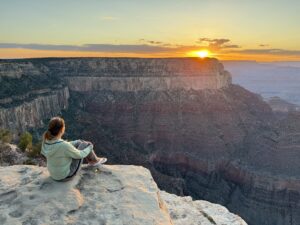

🏜️ Goosenecks, Monument Valley and Forrest Gump Point – coffee on the edge of the world ☕️
It was night. Pitch black.
The GPS said, “You’ve arrived,” but outside the window – nothing but silence and open space.
No lights. No silhouettes. Just the wind and stars scattered across the sky like someone had spilled glitter overhead ✨
We parked by instinct. Fell asleep with absolutely no idea where exactly we were.
And in the morning…
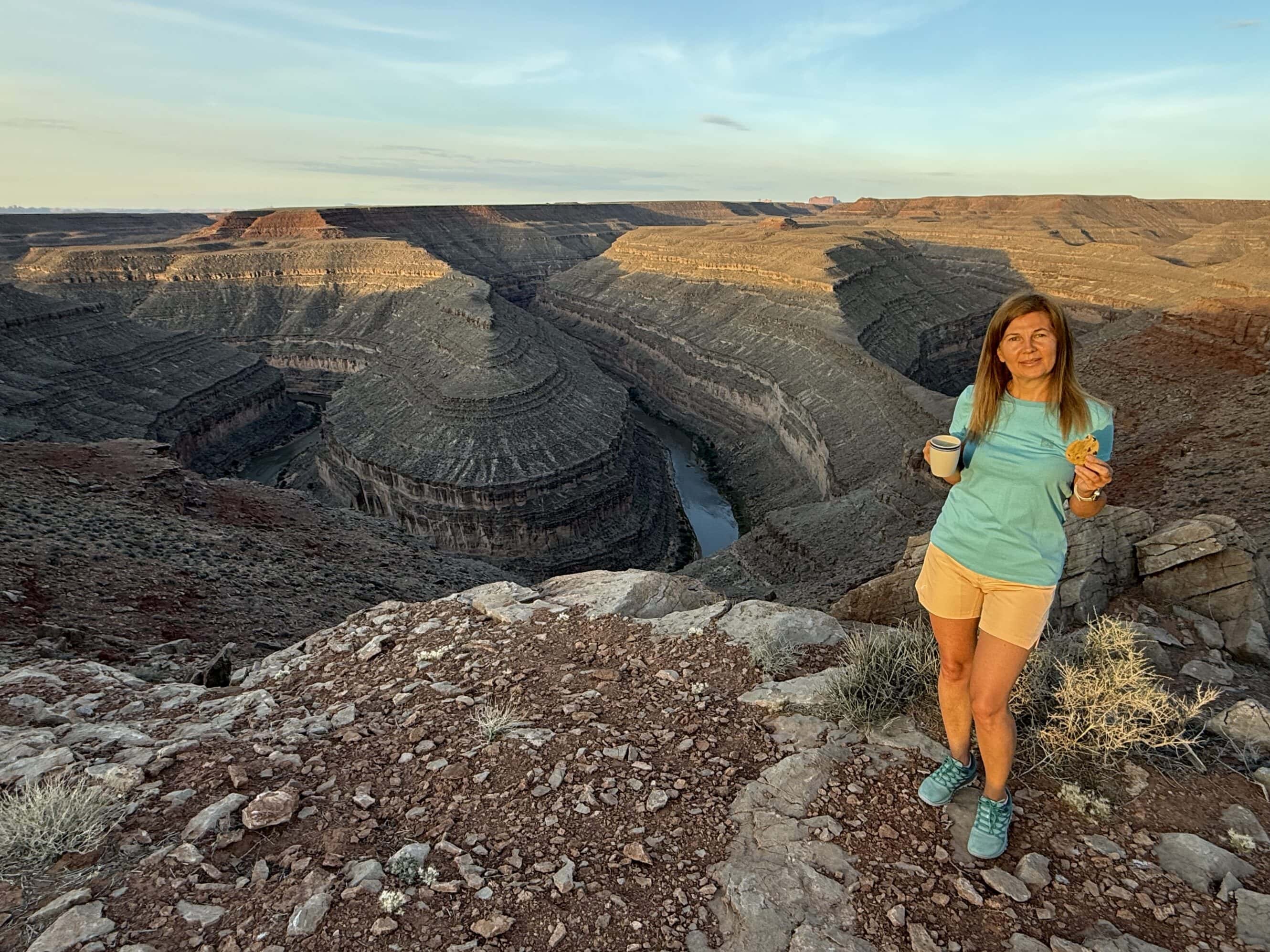
The door swings open and BAM — a sheer drop beneath us, and far below, the San Juan River winding like a giant serpent through the canyon.
Goosenecks State Park — proof that nature has more patience than all of us combined.
Six million years of water and rock shaping this landscape. We needed just one sip of coffee to fall in love ☕️💛
🌀 Goosenecks, Utah – the San Juan River that never takes shortcuts 🌊😎
🌀 Goosenecks look like the work of someone obsessed with perfect curves.
Here, the San Juan River bends into near horseshoes, because the rock was simply too stubborn to let it take a shortcut.
📏 From the viewpoint to the river, it’s over 300 meters straight down.
That’s why everything looks like a miniature set. Your brain says “beautiful,” your knees say “easy now.”
🪨 Those horizontal lines in the rock aren’t decoration.
They’re ancient seas, deserts, and layers of mud from hundreds of millions of years ago. In short: the world’s archive — just without the labels.
🌊 The San Juan flows slowly, but it never gives up.
It didn’t win with force. It won with patience. As always.
🧭 What truly hits you here is the perspective.
You stand high above, look far into the distance, and suddenly the landscape feels more “top of the world” than human scale.
Right there, on the very edge, we had the best coffee in the world.
Not from a barista, not from a fancy machine — just from a kettle, blended with silence, open space, and that feeling that nothing else is needed.
🎬 Monument Valley – where the American West takes center stage
After a wake-up like that, it’s hard to top anything… but America always has another ace up its sleeve.
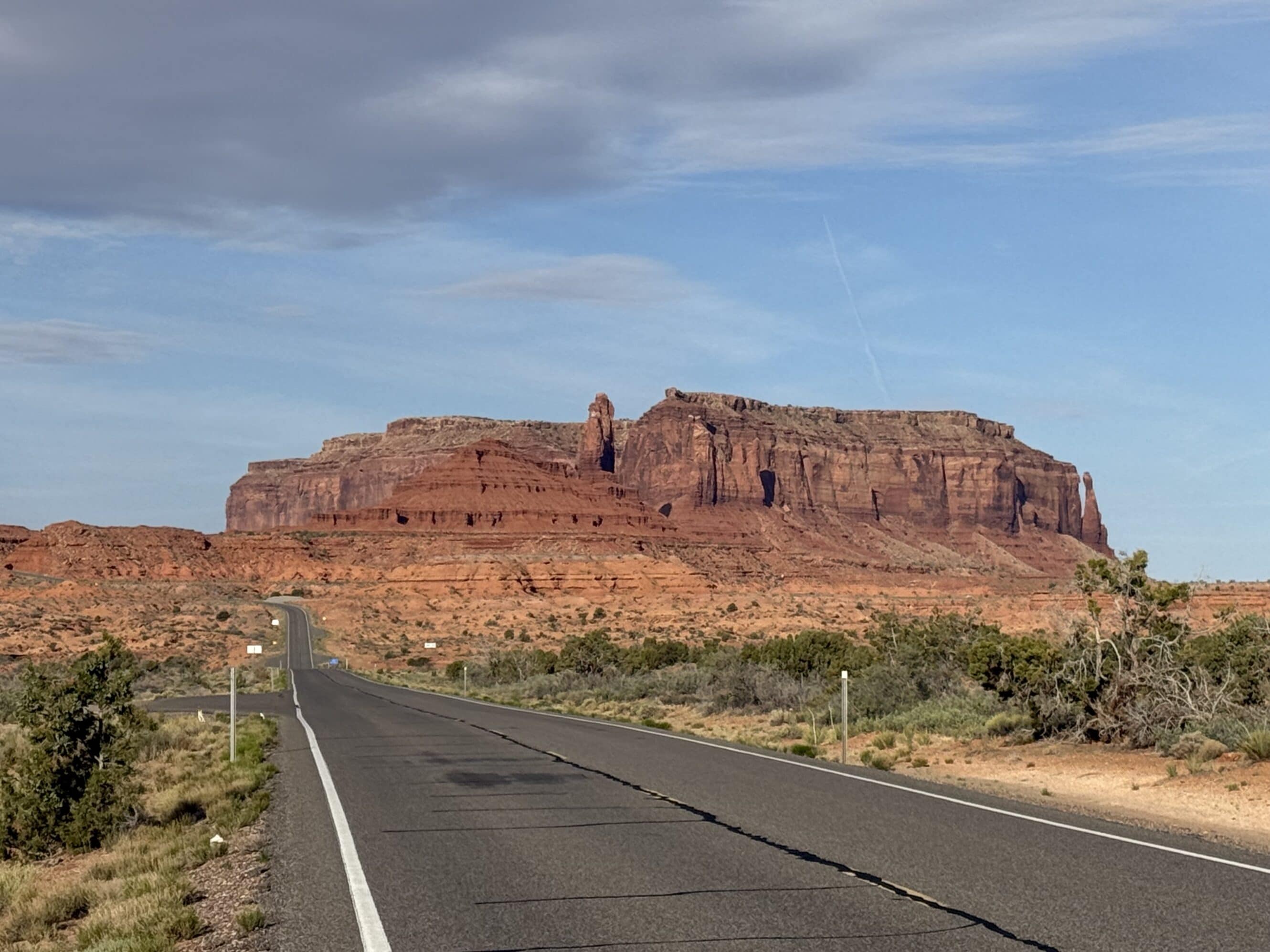
Monument Valley is the kind of view you recognize before you even get there.
It was in Forrest Gump, Indiana Jones, Easy Rider, every Marlboro ad ever made — and probably even your old screensaver.
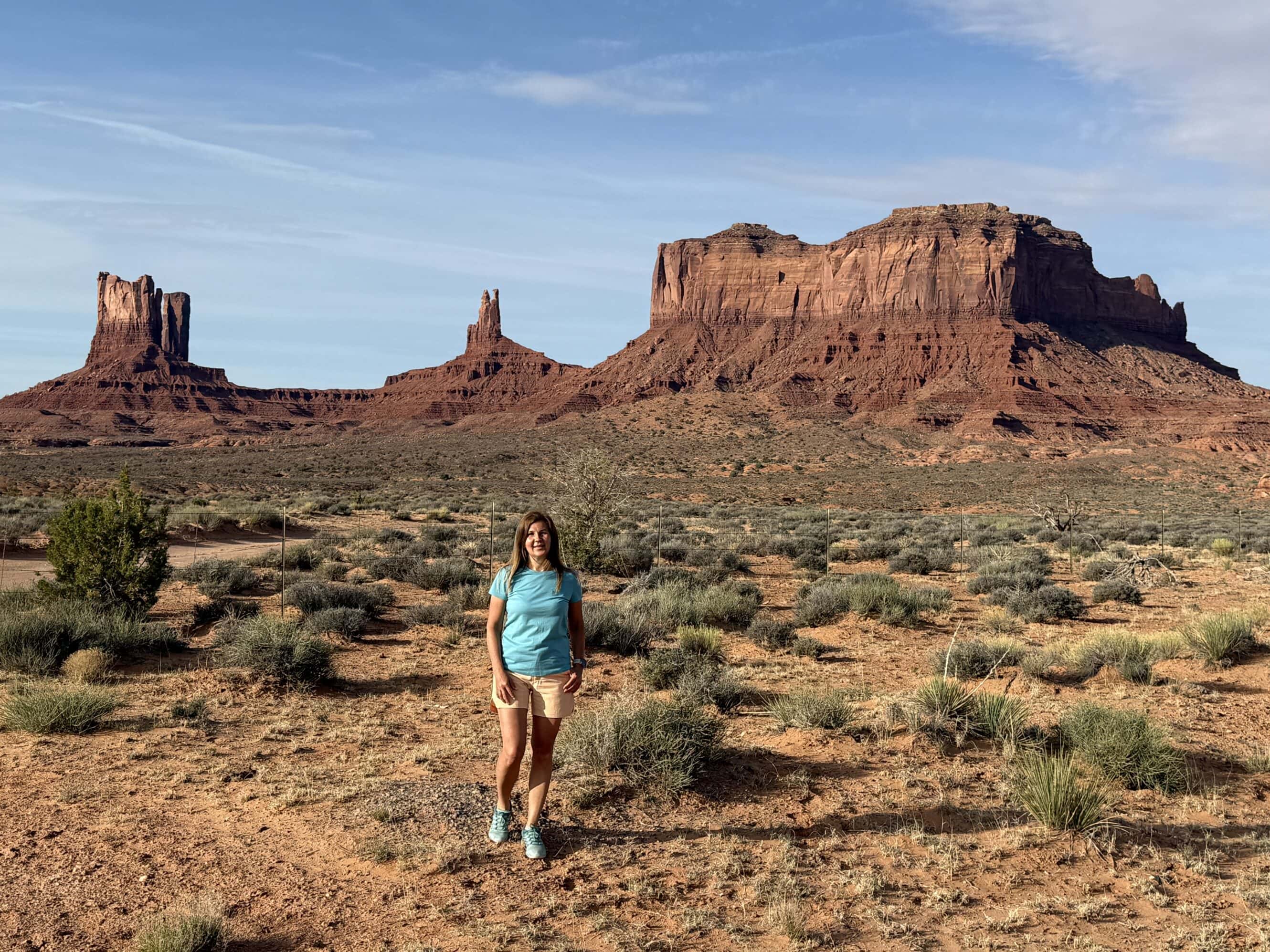
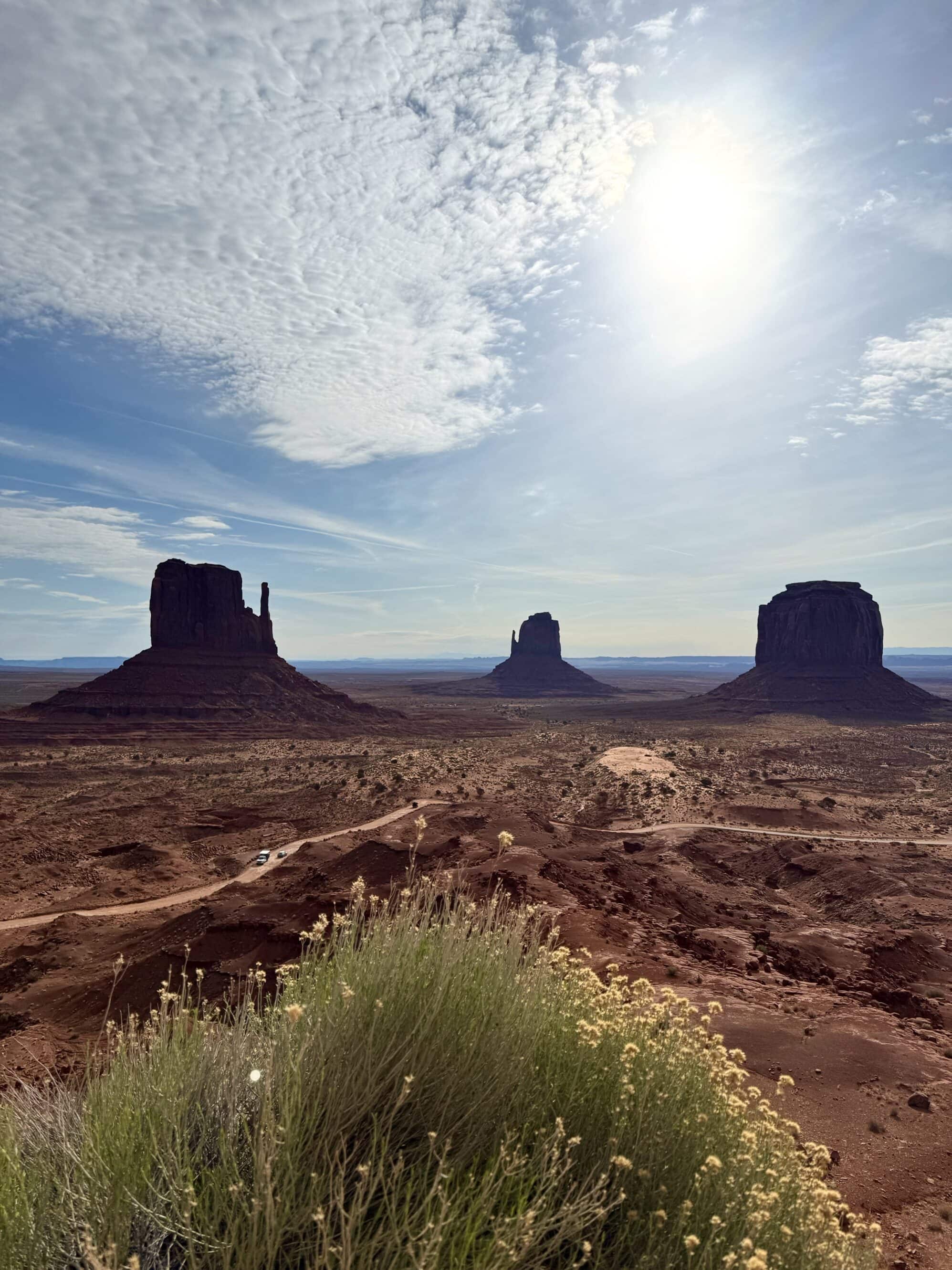
The rock formations rise from the desert like giant stone totems.
West Mitten, East Mitten, Merrick Butte — names straight out of a Western, scenery straight out of another planet.
We couldn’t drive our camper any deeper (Navajo Nation rules — and honestly, that’s a good thing, because that’s why the silence still exists there).
But even from the terrace by the Visitor Center, it felt like sitting in an 8K panoramic cinema 🎥
– Can you feel the Wild West?
– I can feel my phone running out of storage any second now 📸
🚗 Forrest Gump Point – the moment when time stands still
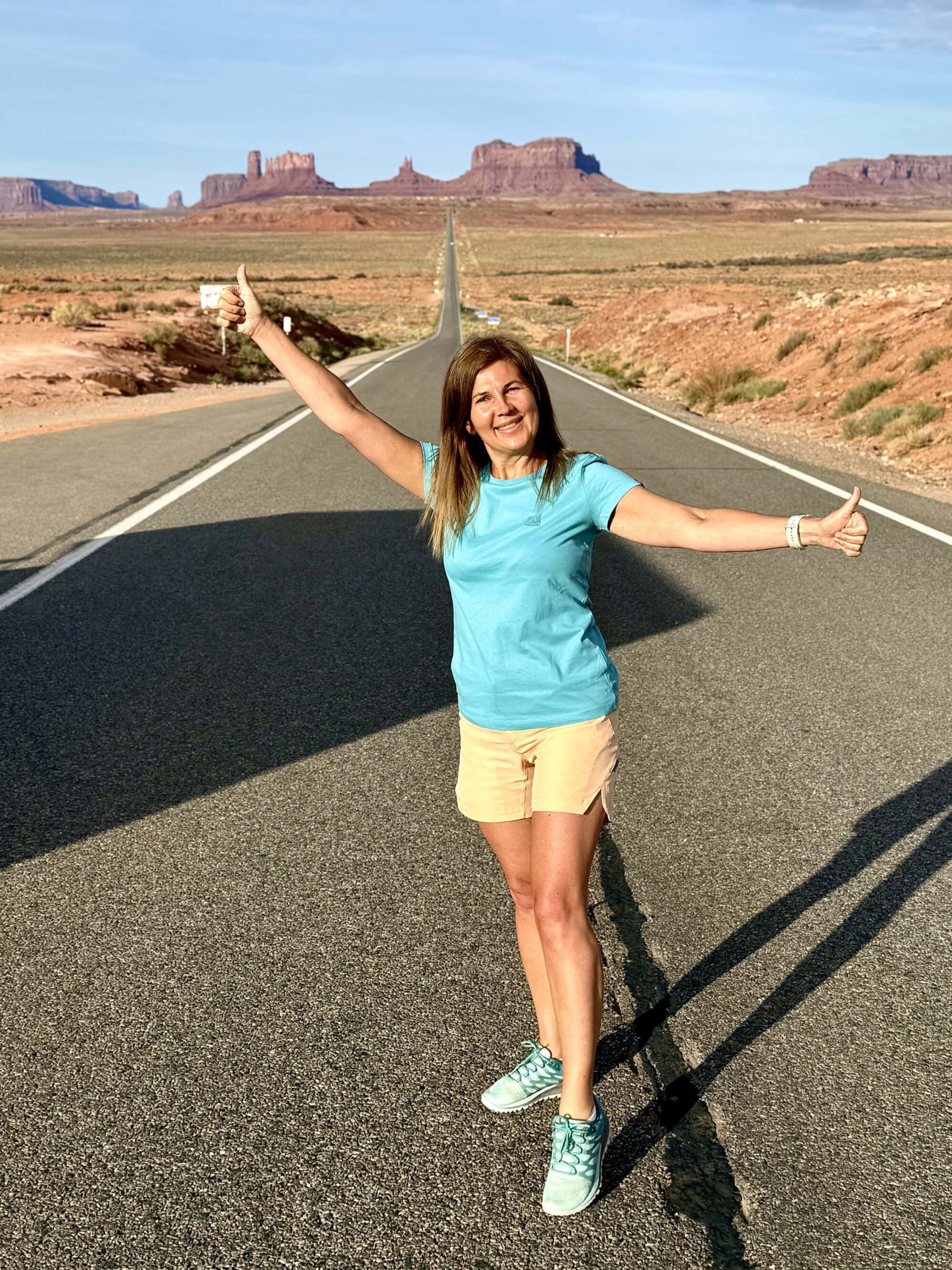
A few miles down the road, the highway starts to climb — and in the distance… that view.
A perfectly straight ribbon of asphalt leading toward Monument Valley.
Right here, in 1994, Forrest Gump stopped after three years of running and said:
“I’m pretty tired… I think I’ll go home now.”
And you know what?
We stopped too — just for a moment.
Not out of exhaustion, but out of pure awe.
Right there — by an ordinary road, at the edge of the world, somewhere between dust and a dream — we felt it wasn’t just a road trip anymore.
It was a movie moment… and we were living it for real.
🤓 Facts that sound like a movie script:
🪨 These rocks aren’t old. They’re absurdly old.
Monument Valley sits on the Colorado Plateau, where the rock layers are around 250 million years old. Hollywood? Just a brief cameo in the history of stone. The cameras showed up much, much later.
🧭 This isn’t a national park. And it never was.
Monument Valley belongs to the Navajo Nation. The entrance fee doesn’t go to the federal government or the National Park Service — it stays with the people who live here. They set the rules. You’re a guest here, not the owner of the view.
🎬 The Wild West you picture in your head most likely begins right here.
John Ford shot nine Westerns in Monument Valley, and the rest of Hollywood followed his lead. One place launched an entire genre — and it’s still landing the lead role without an audition.
🛣️ Forrest Gump Point isn’t an official attraction.
It’s just a stretch of road — U.S. Highway 163. Coordinates 37.1016° N, 109.9906° W lead you straight to the asphalt where everyone suddenly slows down. No signs, no instructions. There’s just something about that perspective that makes your schedule stop mattering.
🚀 This landscape was “strange” enough to play the Moon.
Apollo program astronauts trained here before heading into space, because it looked alien enough to pass. When rocks can convincingly play another planet, you know they’re doing their job well.
⏸️ The best thing about Forrest Gump Point is that it completely ruins your schedule.
People stop in the middle of the road, take photos, and for a moment forget where they were even headed. The road wins over the plan.
And that’s exactly what makes it beautiful.
🏜️ The end of the Western, the beginning of turquoise
We leave behind the icons, the Western legends, and the road half the internet already knows.
The red rock buttes slowly fade in the rearview mirror, and the asphalt once again starts leading into the unknown.
Around the next bend, the landscape shifts its tone.
The colors turn brighter, the light sharper, and the rocks start to look as if someone cranked up the contrast by hand — not with a filter 🎨✨
This is no longer the Wild West from a movie.
It’s the beginning of a place where the desert meets the water.


💬 Masz pytanie o trasę? Daj znać w komentarzu – chętnie podpowiem! 🤍