

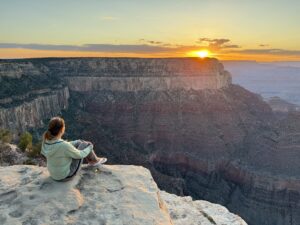

💣 Hoover Dam, Nevada — when humans looked at a river and said stop
There are places that don’t even try to pretend they’re modest — and Hoover Dam definitely belongs to that category ⚡🧱
When you stand on the edge, it feels as if someone pressed pause on the entire river. This isn’t a gentle slowing of the water — it’s a decision made on a grand scale, with ambition and a full awareness of power.
That’s why it’s hard to call it a “pretty view.”
It’s more of a raw demonstration of human capability — impressive not because it’s delicate or beautiful, but because of its sheer scale.
And that’s exactly why it isn’t a pretty place.
It’s a powerful one ⚡
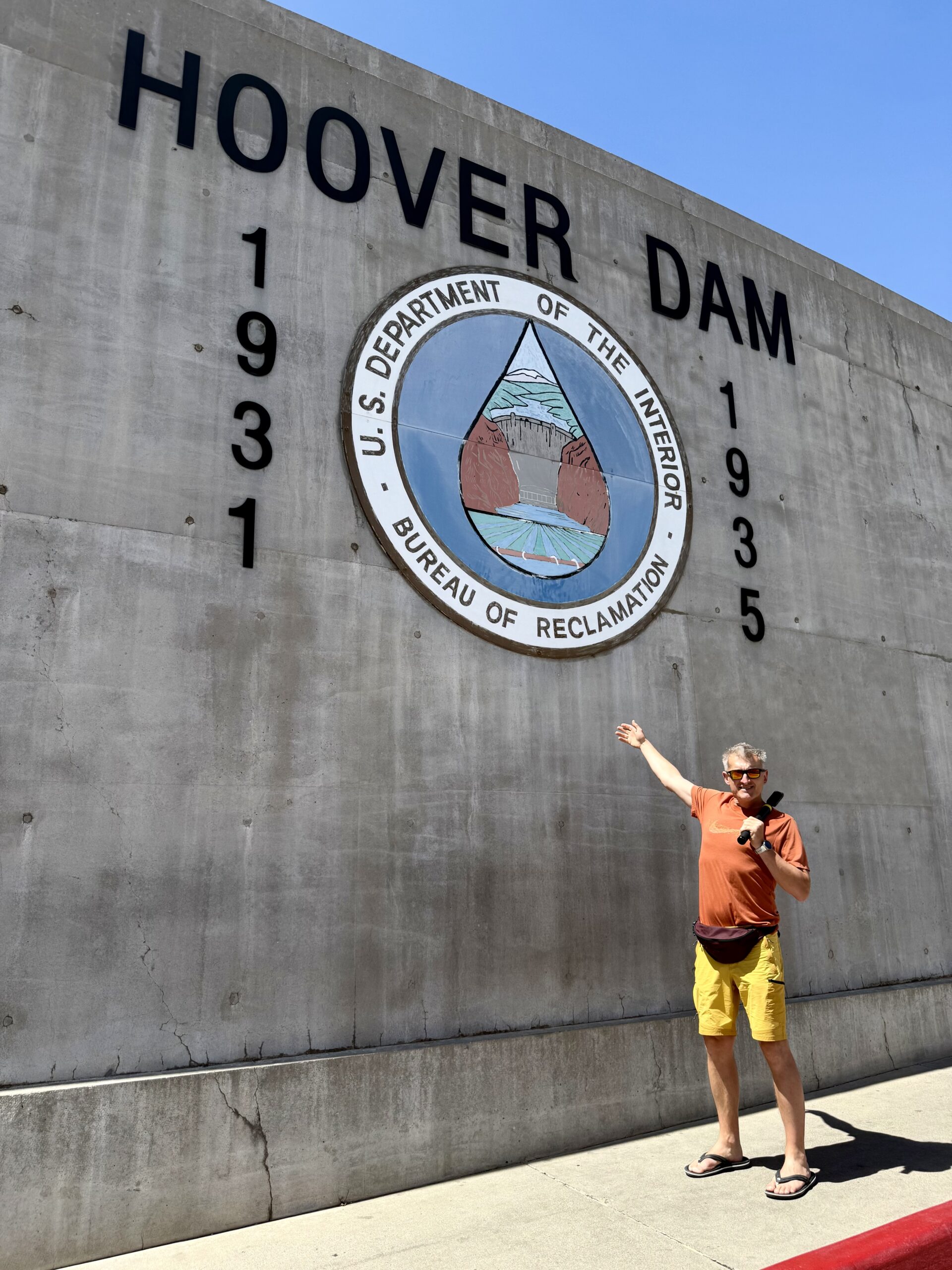
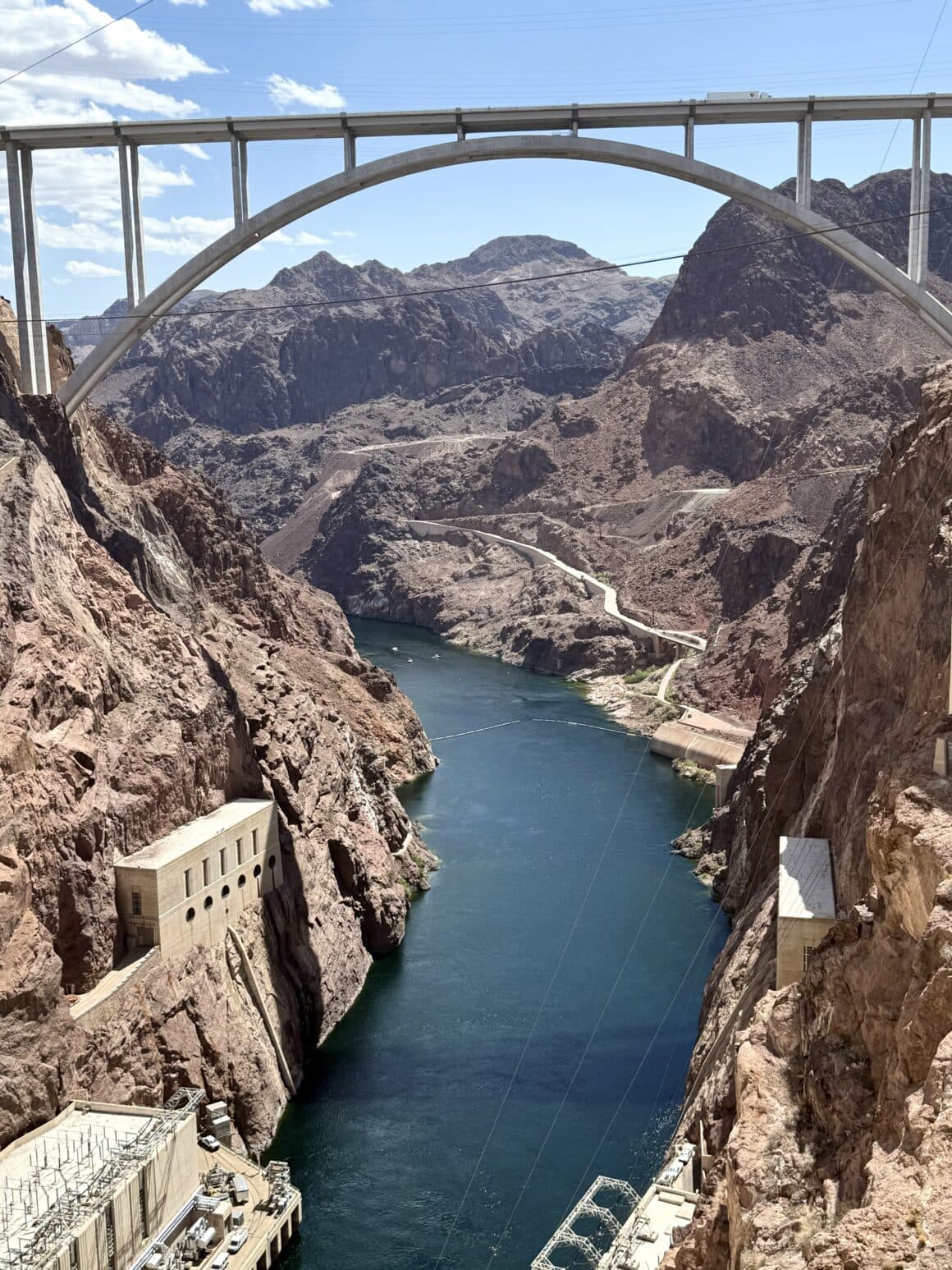
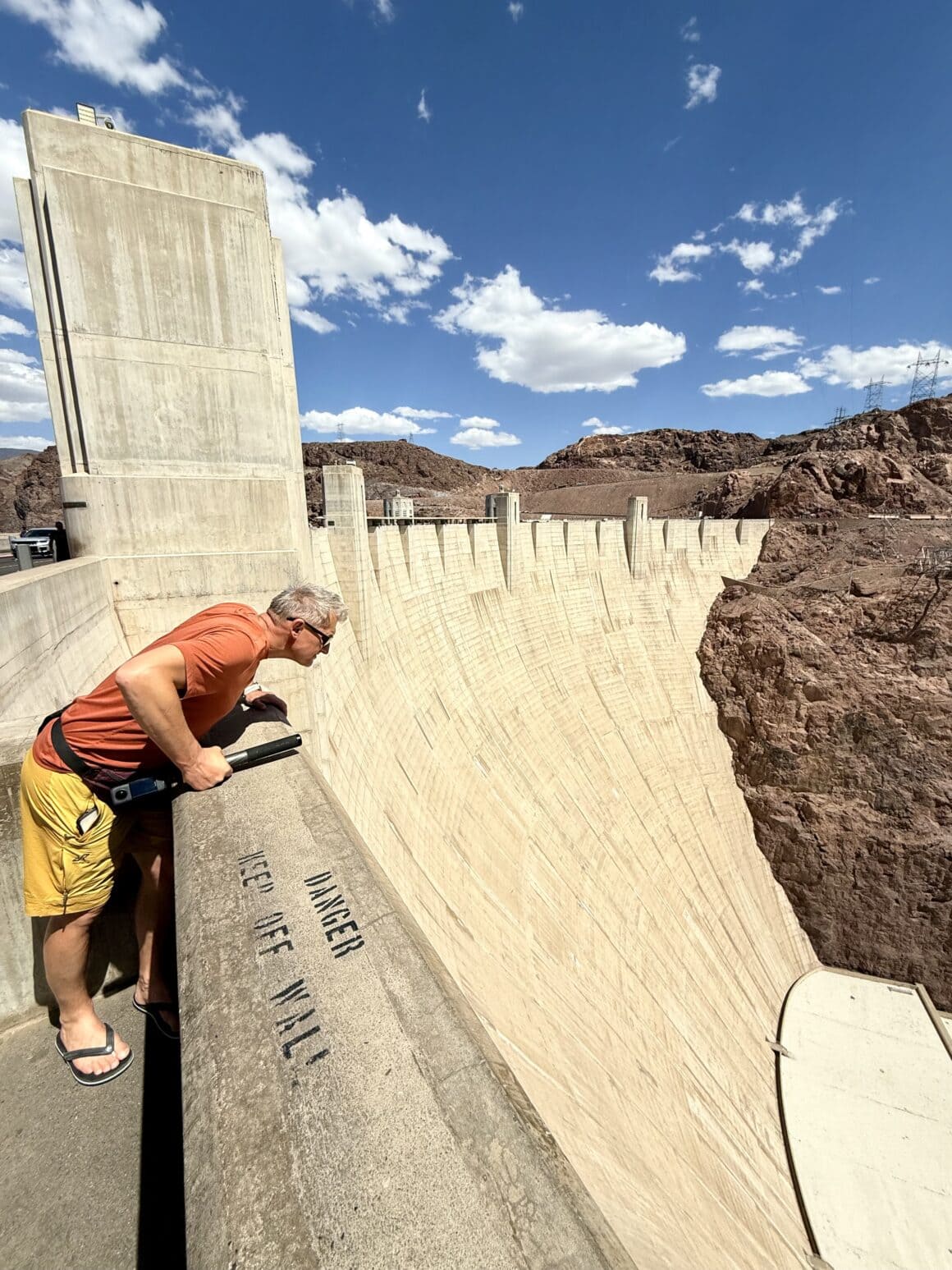
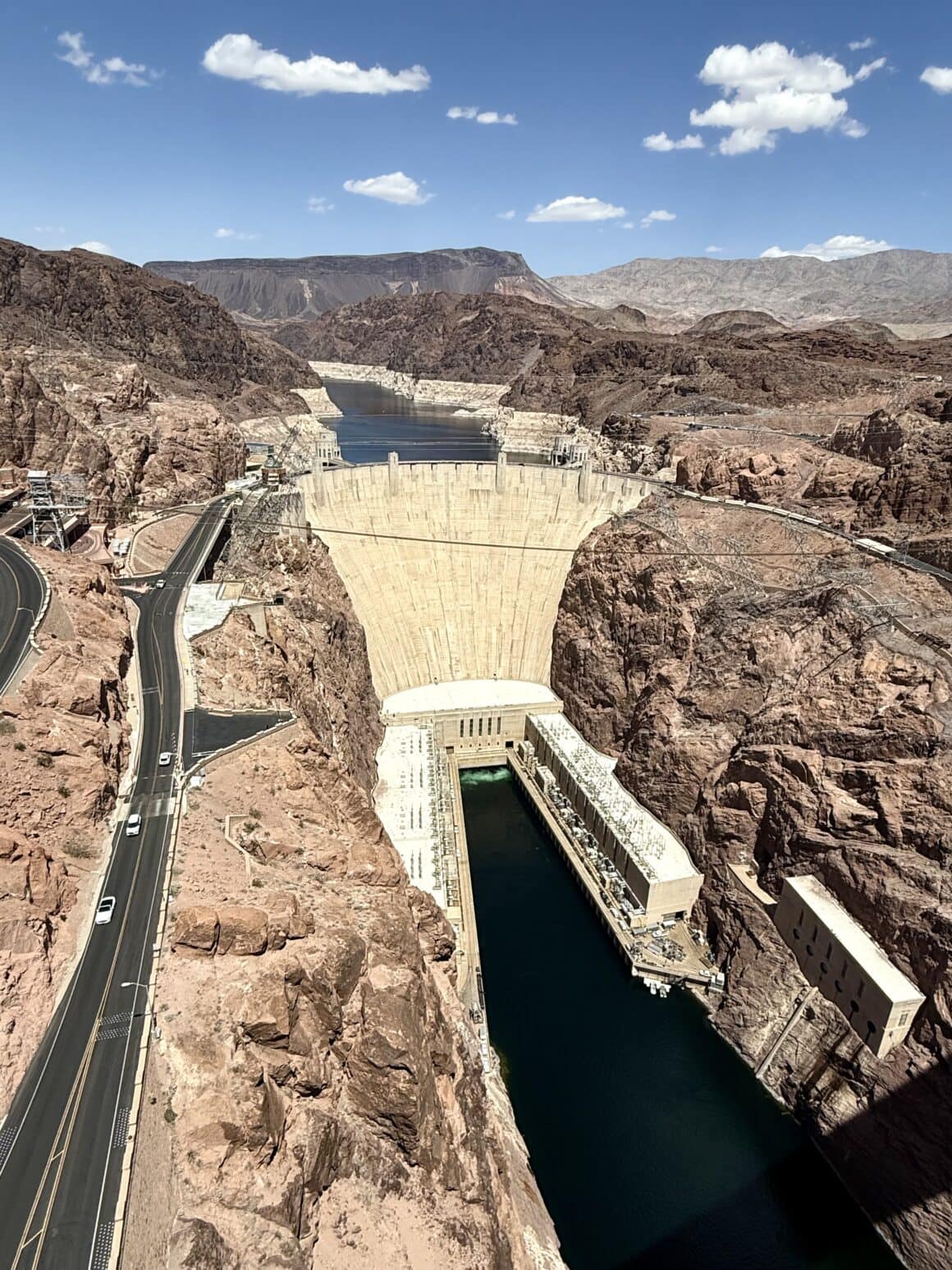
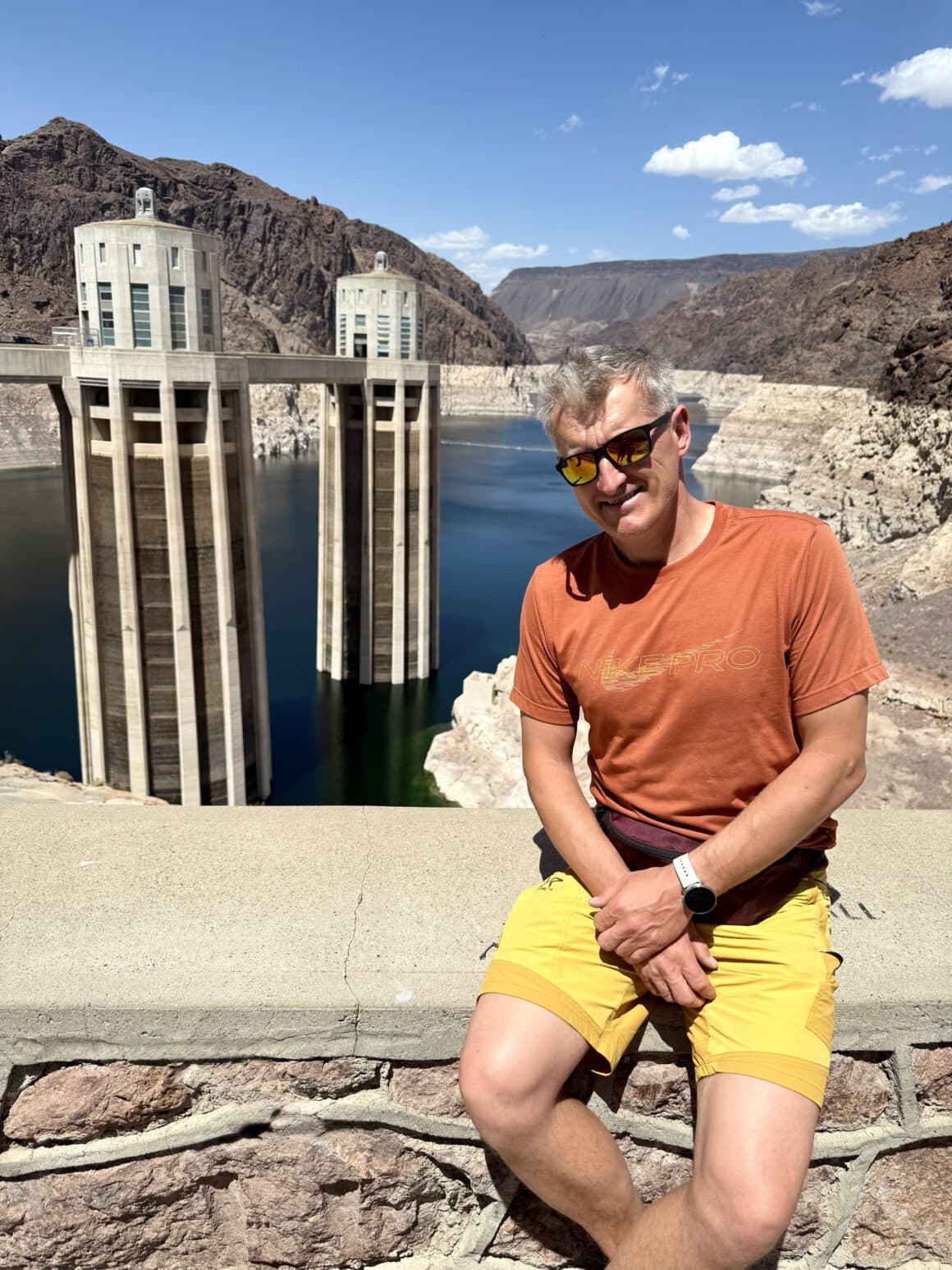
Concrete, clean lines, and symmetry — a cool precision designed to remind nature where its limits are… even though we all know it’s only a temporary ceasefire.
As you walk along the edge and look down, silence comes first — respect follows.
It’s not fear, it’s awareness of scale, because here, humanity truly won a round.
Just one.
And only for a moment ⚡🧱
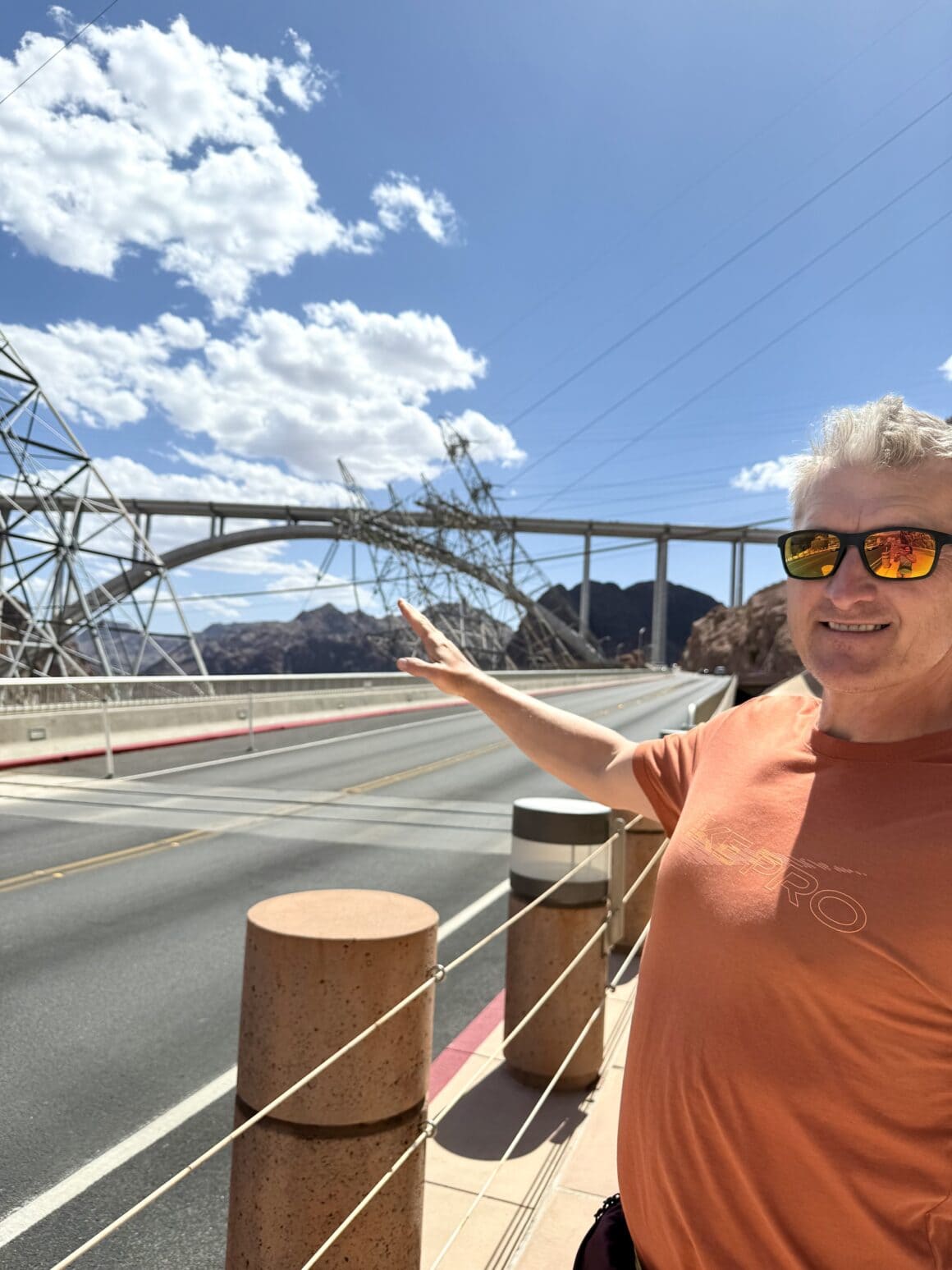
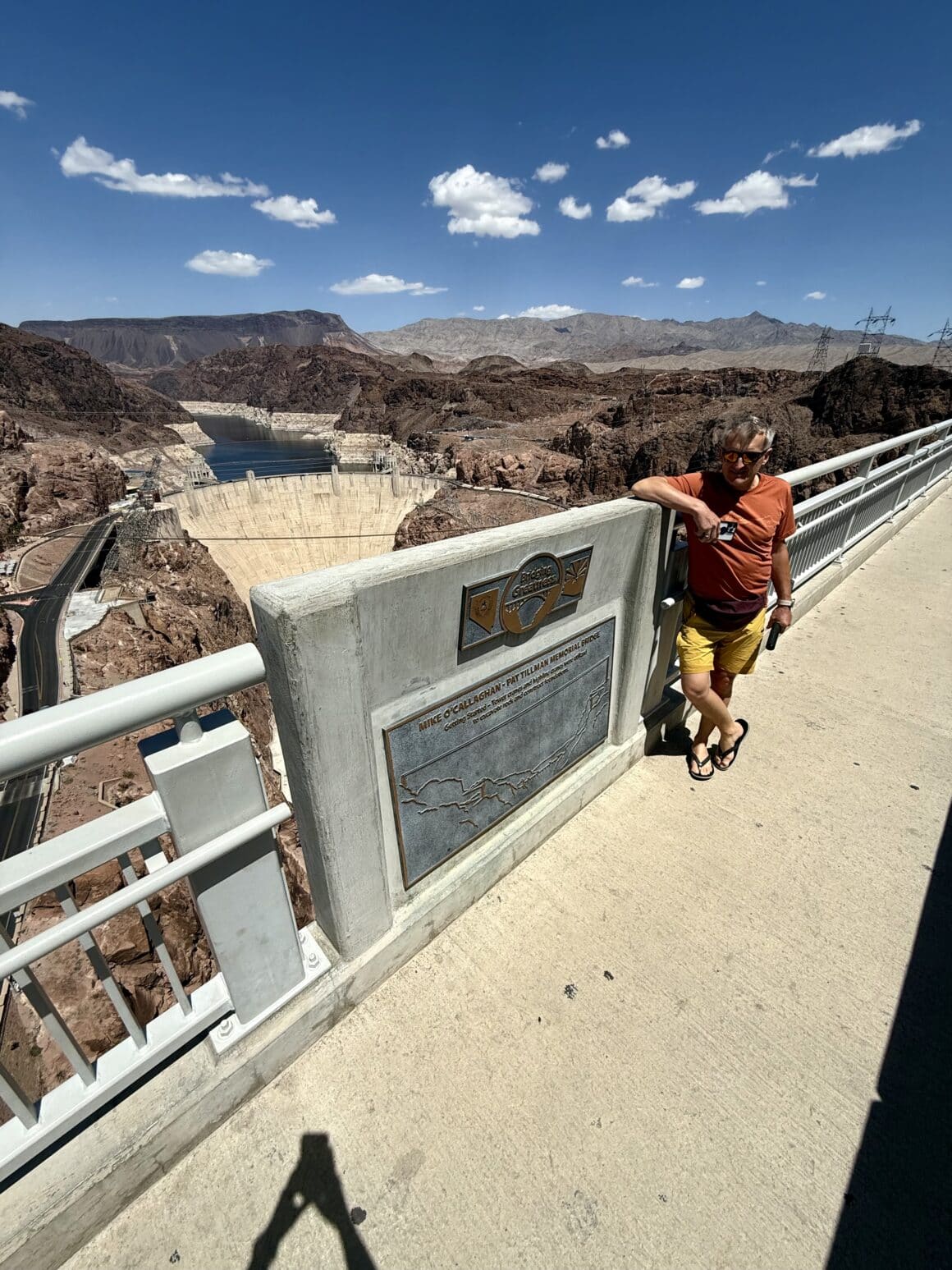
🔎 Hoover Dam — wow facts that genuinely hit hard
🧱 Height of the dam
Hoover Dam rises 221 meters (726 ft) high. That’s like a 72-story skyscraper — except instead of windows, you get solid concrete and the Colorado River.
📏 Crest length
The dam stretches 379 meters (1,244 ft) across. A relaxed walk… until you look down.
⏳ Construction time
It took just 5 years to build (1931–1936). No computers, no drones, no modern machinery. Today, a project of this scale would likely take much longer.
👷 The people
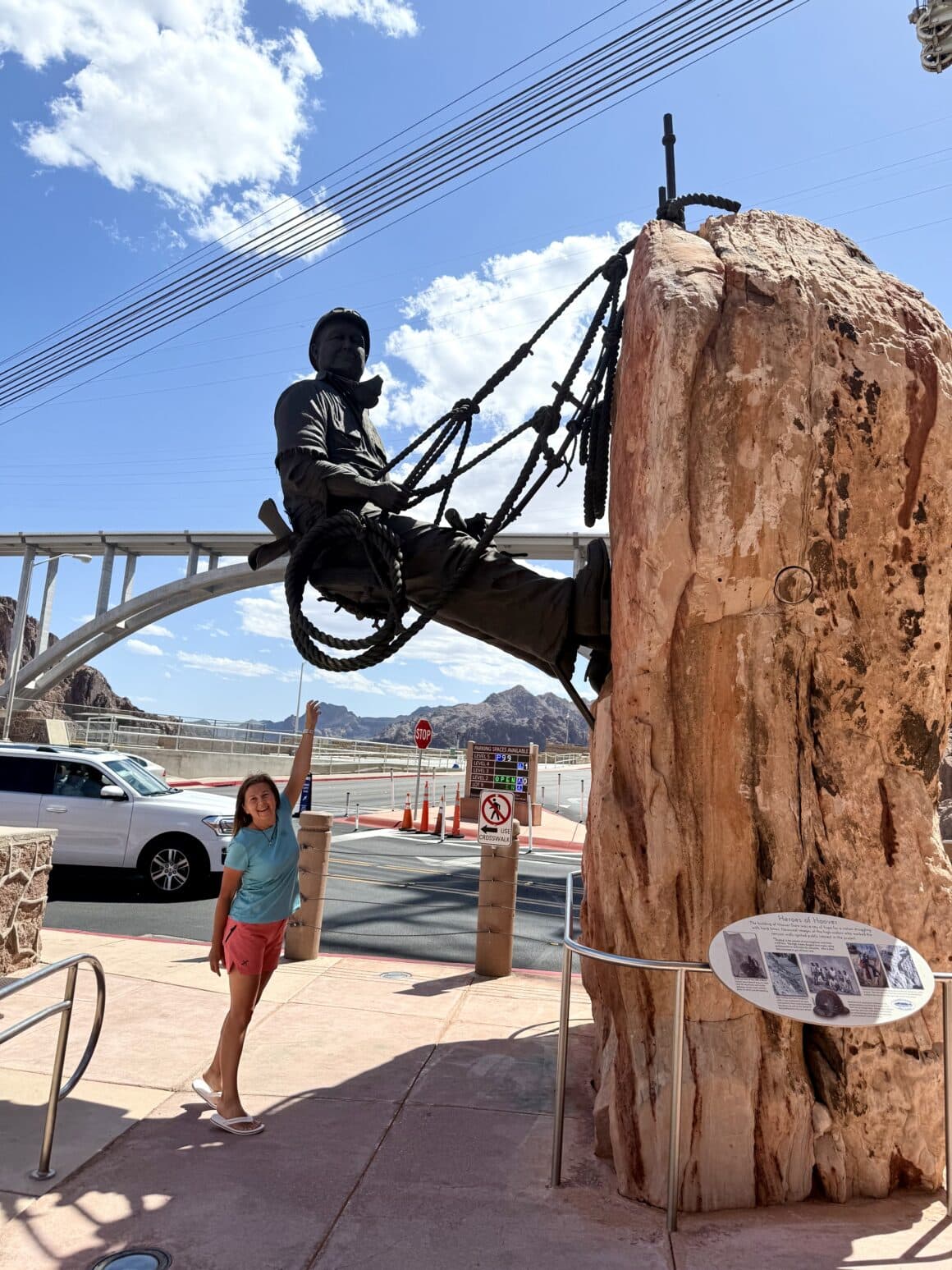
More than 21,000 workers took part in building it. Officially, 96 people lost their lives — unofficially, many believe the number was higher. Conditions? Desert heat, extreme temperatures, and none of today’s safety standards.
⚙️ Engineering that still works today
⚡ Turbines and power
Hoover Dam operates 17 massive turbines on both sides of the dam — Nevada and Arizona. Each can generate up to 130 MW of electricity. Altogether, the dam supplies power to more than 1.3 million people. Las Vegas, air conditioning in the desert, city lights after dark — it all starts right here.
🌀 How water turns into power
Water from Lake Mead rushes down through massive penstocks, accelerating turbines with a force you can’t see — but definitely feel in its impact. The higher the water level, the greater the power output. The lower it drops, the clearer it becomes that even concrete has its limits.
❄️ Concrete that couldn’t crack
More than 3.25 million cubic meters of concrete were used in its construction. If it had been poured as a single solid mass, it would have taken over 100 years to cool.
That’s why:
– the dam was built in interlocking layers,
– miles of steel pipes were embedded inside,
– cold water from the Colorado River was pumped through them,
– and later even ice-chilled water produced on site was used to cool the concrete.
It became the largest concrete cooling system ever created at the time.
Interestingly, the dam still subtly “moves” to this day, responding to temperature changes and water pressure.
It’s not a dead mass.
It’s a living organism made of concrete.
🌊 Lake Mead — why is the water level so low
Lake Mead is:
– the largest man-made reservoir in the United States
– and one of the most depleted in recorded history
📉 Water levels are dropping because of:
– years of severe drought,
– climate change,
– massive water consumption by cities and agriculture.
On the surrounding cliffs, you can see pale stripes — the so-called “bathtub rings,”
marking where the water once stood at much higher levels.
And that’s when Hoover Dam stops being just an attraction.
It starts becoming a warning.
Concrete, numbers, and engineering at the level of hold my river 💥
Here, humans truly went head-to-head with nature — designed it, calculated it, poured it, and made it stand.
At least for a while.
We do what we always do.
Start the engine, leave Hoover behind us,
and drive toward a place where concrete no longer has to prove anything,
and excess is the city’s official strategy 🎰✨


💬 Masz pytanie o trasę? Daj znać w komentarzu – chętnie podpowiem! 🤍